+201007892200WhatsAppع

Insect and rodent control services

All services

Not sure what the pest is? Send a photo or a short description on WhatsApp and we will tell you what it is and how to treat it.

Elalmanya BiologyHomes and businessesSame day, any governorate

No blanket fumigation: we identify the pest first, then decide where to spray

A gecko isn't even an insect, and the weevils in your rice came home in a bag from the supermarket. Neither has anything to do with spraying the walls. That is why our general pest control starts with a simple question: what did you see, and where exactly? The answer tells us whether spraying will help at all.

  • Pest identification
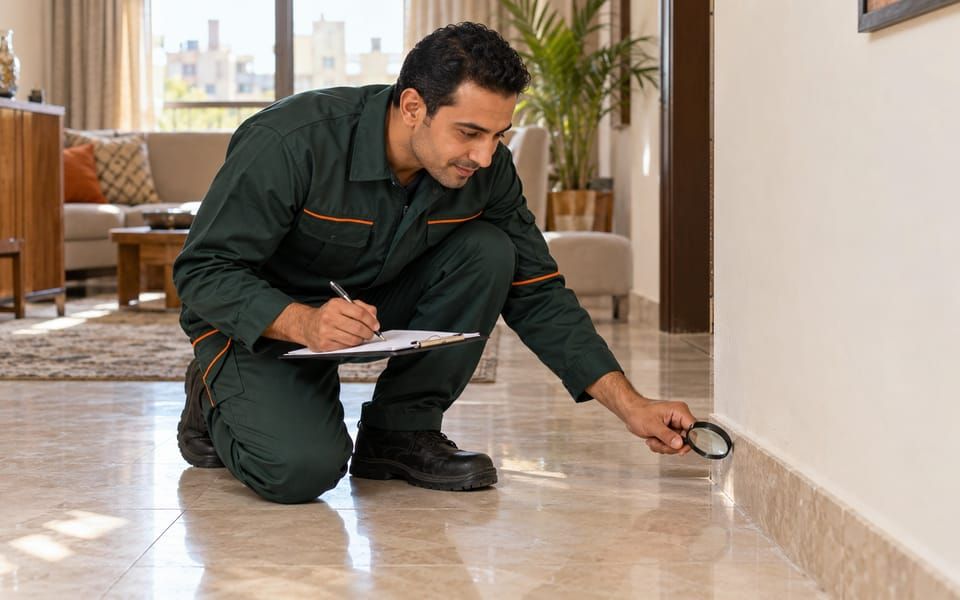
Illustrative photo of an unmasked technician inspecting the corner of a room with a magnifying glass

In short

Our general pest control starts by identifying the pest from a photo, a description or an inspection. For pests that respond to spraying, we spray only the cracks and hiding places. For geckos, silverfish and pantry pests, spraying isn't the answer, so we find the source and show you how to close it. Same-day visits are available in every governorate.

  • We identify the pest from a description or a photo
  • Geckos, silverfish and more
  • Treatment matched to the pest and the place
  • We find the source before treating
  • Cost explained before the visit
  • Safety instructions first
  • Follow-up when your case needs it
  • Homes, offices and restaurants

Signs

Bugs in your home you can't name? Identify them by the signs

Where and when a pest appears tells you what it is. Geckos come out at night by the balcony light, silverfish turn up in the bathtub in the morning, and flour weevils live inside the jar. Compare what you saw with these signs, send us a photo on WhatsApp, and we'll reply with its name and the next step.

  1. A gray creature on the wall near a light

    That's most likely a gecko, about 10 to 12 cm long. It comes out at night next to the balcony or window light and waits for the moths and cockroaches drawn to it. Sometimes it makes a thin squeak when startled.

  2. Long brown droppings with a white tip

    These are gecko droppings. You find them on the floor under a window, or on curtains and rugs, and they can stain fabric. Finding them in a room means a gecko spends time there, not that one wandered in by chance.

  3. A thin silver insect in the bathtub or sink

    That's a silverfish. Its body is slender and tapers toward the back, it is a shiny silver color with 3 thin tails at the end, and it is about 1.25 cm long. It comes out at night, and in the morning you find it trapped in the bathtub because it can't climb the smooth sides.

  4. Holes and scraped patches in books and paper

    Silverfish scrape the surface of paper, cardboard, wallpaper and starched clothes, leaving irregular holes and faded patches. If you also find fine silvery scales like dust nearby, you have silverfish.

  5. Small moths and webbing in the flour bag

    These are pantry pests, such as flour and rice weevils and pantry moths. You see small moths flying around the kitchen, or tiny beetles in the rice, pasta and spices, silky webbing inside the pack, and small holes in the bag.

  6. Holes in wool and carpets

    Those are clothes moths, and the damage comes from the larvae, not the moths. It shows under collars, on cuffs and on carpet under the sofa, with small silk tubes full of fibers nearby. Cotton and synthetics are left alone unless they contain wool.

  7. Found one of these signs? Take a photo and send it to us, and we will tell you whether it is other pests or something else before any visit.

    Send the photo

Getting rid of geckos: why sealing gaps matters more than spraying

A gecko is a small reptile, not an insect, and it feeds on insects. At night it waits next to the balcony or window light for the moths and cockroaches that come to it, and by day it hides in a crack in the wall or behind the AC pipes. If you have one at home, there is food for it, and there is a gap it came in through.

Gecko control starts there. Texas A&M AgriLife guidance says no pesticide is registered for geckos, and that the answer is to close off the ways in. Replace worn rubber seals on doors and windows, and fill the cracks around pipes and electrical cables with silicone or foam. If you find white oval eggs, often in pairs inside a crack, a gecko is laying nearby and that spot needs sealing.

The technician shows you which gaps the geckos are using and which insects are bringing them, and tells you where to start.

Silverfish in the bathroom and in books: the problem is damp

Silverfish like warm, damp places such as the bathroom, the cupboard under the sink and the laundry room. They eat anything with starch or glue in it, from book pages and bindings to wallpaper and starched clothes, along with flour and pasta. That’s why they turn up on bookshelves, in the storage loft and in old cardboard boxes.

Spraying alone won’t solve it, because as long as the humidity stays high, more will come. Start by fixing any leak under the sink or in the air shaft, run the bathroom extractor fan, and seal the gaps around pipes. Move stored books and papers every so often, and keep dry food in airtight jars. If the infestation is heavy, any spraying is aimed at cracks and hiding places, not into the air of the bathroom.

Other pests that show up in Egyptian homes

Plenty of pests show up in homes without the owner knowing what they are called. These are the most common:

  • Earwigs: they hide by day in dark, damp spots, such as under plant pots, and come indoors when it gets very dry, hot or cold outside. They don’t harm people, and sweeping them up and sealing cracks works better than spraying indoors.
  • Spiders: most can’t harm people, and they feed on other insects. A vacuum cleaner removes the web and the spider together, and less clutter leaves them fewer places to settle.
  • Crickets: outdoor lighting is the main reason they gather. Yellow bulbs attract them less, and sealing the gaps near the lights keeps them out.
  • Flour and rice weevils: they usually arrive in a pack that was infested from the start. The fix is throwing out what is infested, cleaning the shelf, and storing food in jars.
  • Clothes moths: their larvae eat wool. Washing in hot water or dry cleaning kills the larvae, and storing woolens in sealed bags protects them until winter.

Bed bugs, cockroaches, rats and mice, ants, mosquitoes, ticks, fleas, woodworm and termites each have their own page explaining the treatment, because each one hides in different places and has a different life cycle.

When should you call a pest control company?

If the pest keeps coming back after you have sealed the gap or fixed the leak, if you find it in more than one room, or if you have no idea what it is, it’s time for a diagnosis. At this point many people ask for a whole-home fumigation, but one photo on WhatsApp can save you spraying the entire house for the wrong insect. If you run a restaurant or a food store, report it as soon as you see a sign in the stock, because one infested pack can carry the insect to the rest of the shelves.

Send the photo on WhatsApp to +201007892200, or find the other ways to reach us on our contact page.

Why it comes back

Does pest spraying get rid of geckos and silverfish?

Not on its own. A gecko is a reptile, not an insect, and no pesticide is registered against it, while silverfish return as long as the damp stays. Spraying works when it targets the hiding places of an identified pest. Spraying the whole house without a diagnosis spends money on pests you don't have and leaves the source untouched.

  1. Geckos follow their food

    A gecko waits by the light for the insects that gather around it. Texas A&M AgriLife guidance says no pesticide is registered for geckos, and that spraying for insects does little to their food supply. Sealing gaps and cutting down the insects around your lights works better.

  2. Damp brings silverfish

    Silverfish need high humidity, above 75% in hot weather. They live about 3 years and can go months without food. If the leak under the sink or in the air shaft is still there, they will be back after any spraying.

  3. Spraying near food is a mistake

    Flour and rice weevils are handled by throwing out the infested pack, cleaning the shelf, and storing the rest in jars with tight lids. Spraying pesticide inside a kitchen cupboard can harm the people in the house more than the insects themselves.

Treatment

How our household pest control works, step by step

The work follows 5 steps, and steps 1 and 2 matter most: identifying the pest and finding its source. After that, the treatment depends on the pest, either targeted spraying where it helps or a fix without pesticide where that suits it better. At every step we tell you what we will do and why before we start.

  1. A photo and a description before the visit

    Send a clear photo of the insect or of the damage it left, and tell us where and when it shows up. At night near a light? In the morning in the bathroom? Inside food packs? Sometimes the photo alone is enough for us to identify the pest and tell you whether you need a visit.

  2. Inspecting the hiding places

    The technician searches where that pest likes to be. That means under the sink, behind the fridge and in the air shaft if the problem is damp; wardrobes and the storage loft if there are moths; and around windows, lights and the balcony if there are geckos.

  3. Finding the source

    Each of these pests has a cause, such as a water leak, a gap beside the AC pipe, an infested bag of flour, or an outdoor light that draws insects. We show you the source so you see it yourself, and we tell you how to fix it, because without that any treatment only works for a while.

  4. Treatment by pest type

    For pests that respond to spraying, the spray goes into cracks and hiding places, away from food cupboards and kitchen utensils. For geckos and pantry pests, the plan relies on sealing gaps and cleaning out the source, not on pesticide.

  5. Advice after the visit

    Before leaving, the technician explains how to lower the damp, how to store food and woolens, and when you can go back into treated areas. If the pest turns up again later, send a photo so we can tell whether it is the same problem or a new source.

Ready for the first step? Tell us what you saw.

Safety

Is pest spraying at home safe for children and pets?

Safety depends on the product, how it is used and where it goes. So before the visit we ask about children, pregnancy, allergies and pets, and you have the right to know the product's name and details before any spraying. For geckos and kitchen weevils, the right fix often uses no pesticide at all, which is easier on everyone.

  • Children and pregnancy

    Tell us on the first call. Depending on the product, the technician tells you how long to stay out and how to air the place. Don't let a child play on the floor or near sprayed walls until they are completely dry.

  • Kitchen and food cupboards

    We never spray inside food cupboards or on shelves holding uncovered food. Clear away food and dishes before the visit, and wash the surfaces you prepare food on before you use them again.

  • Pets and aquariums

    Keep cats, dogs and birds in a closed room away from the spraying until the technician tells you otherwise. Cover the aquarium and switch off its pump, because some products harm fish even in small amounts.

  • Gecko droppings

    Reptiles can carry Salmonella bacteria in their droppings. Pick up droppings with a damp tissue or gloves, wipe the spot, and wash your hands with soap and water. Don't let children under 5 handle geckos or play where they leave droppings.

Who it is for

Pest control for homes, restaurants and warehouses

Pests without a familiar name turn up wherever there is damp, paper or stored food. At home the problem is usually one room or a bathroom; in a restaurant or a warehouse it can be a whole shipment or a paper archive. What changes is the size of the inspection and the number of spots that need monitoring.

Homes and apartments

In an apartment, these pests usually come from a single source, such as a bathroom leak, an old bag of rice, or an open window next to a light. Send us a photo of the insect and where it appears, and we'll tell you what it is and whether it needs a visit or you can handle it yourself.

Send details of your home

Businesses and offices

In restaurants and food stores, flour and rice weevils can arrive with an infested shipment and spread along the shelves. In offices and schools, silverfish find food and damp in archives and cardboard boxes. Here the inspection covers the stock and the shelving, and we agree with you on monitoring points and on instructions that help staff spot the signs early.

Ask for a business quote

Price

What sets the price of general pest control?

No single price fits every case. An apartment with one infested room is not the same as a whole apartment, and a home is not the same as a business. The cost depends on these four factors, and we explain it in detail before you confirm the booking, with no surprise charges after the visit.

  1. Size and type of placeA 90-square-meter apartment is not the same job as a villa with a garden, and a restaurant is not the same as a warehouse.
  2. Type of pestEach pest needs its own product and method. Gel bait for cockroaches, bait stations for rats and mice, and wood injection for woodworm.
  3. How far it has spreadA first sighting a week ago is different from an infestation that has been there for months. That is why we ask for photos and signs.
  4. How many visits the case needsSome cases need a follow-up or an extra visit. We decide that after checking which insects or rodents are involved and how far they have spread.

Ask for the quote to show:

  • Inspection and finding the source
  • The products used and their details
  • Number of visits and the follow-up needed
  • Terms and length of any guarantee, if there is one
  • How we record what was done on the visit

Coverage

General pest control in every governorate, same day

We cover all 27 governorates of Egypt with same-day visits. Send your area and the problem on WhatsApp or call us, and we will set a visit time for your home or business. The groups below show the main cities and districts in each region we reach.

  • Greater CairoCairo, Giza and Qalyubia, including Nasr City, New Cairo (Fifth Settlement), Rehab City, El Shorouk, Madinaty, Maadi, Heliopolis, Helwan, 6th of October, Sheikh Zayed and Mohandessin
  • Alexandria and the CoastAlexandria, Beheira, Matrouh and the North Coast
  • The DeltaGharbia, Monufia, Dakahlia, Sharqia, Kafr El Sheikh and Damietta
  • Canal Cities and SinaiPort Said, Ismailia, Suez, North Sinai and South Sinai
  • Upper EgyptFaiyum, Beni Suef, Minya, Asyut, Sohag, Qena, Luxor and Aswan
  • Red Sea and New ValleyRed Sea and New Valley
Send your area and book today

Questions

Common questions about other pests

These are the questions people in Egypt ask most about other pests, with answers from our daily work. If yours is not here, type it in the box below. It lands in our WhatsApp, and one of the team replies about your exact situation.

What are the methods of pest control at home?

The method depends on the pest. Some respond to targeted spraying in cracks, to gel or to bait. Others are solved without pesticide, such as sealing gaps for geckos, lowering the damp for silverfish, and airtight jars for rice weevils. That is why the diagnosis comes before choosing a method.

How much does pest control for an apartment cost?

We set the price once we know the pest, the size of the apartment and how far it has spread, because a gecko on the balcony is not the same job as silverfish in every bathroom. Send a photo and the number of rooms on WhatsApp, and we'll tell you what it needs and the price before you book.

Does bug spray kill geckos?

Aerosol bug spray is made for insects, and no pesticide is registered for gecko control. Even if one gecko is affected, whatever brought it in is still there, meaning insects gathering at a light and a gap in a window or door. Sealing gaps and cutting down the insects around lights does more than the spray can.

Do wormwood or eggshells keep geckos away?

The Texas A&M AgriLife guidance on geckos doesn't mention any smell or home remedy that repels them. What it recommends is sealing cracks around windows, doors and pipes, and reducing the insects they feed on. As long as the food and the gap are there, the gecko will come back.

Do geckos come near people while they sleep?

Geckos look for insects, not people. That's why you find them near lights and windows where moths and mosquitoes gather. If one shows up in the bedroom, it most likely came through a gap in the window or under the door, and closing that gap is the first step.

Do silverfish bite?

No, silverfish don't bite people. Their jaws are very weak and only scrape the surface of paper and fabric. The trouble is the damage they do to books, wallpaper and starched clothes, and the fact that they point to high humidity, which needs fixing before any spraying.

Are silverfish the same as moths?

No, they are two different insects. Silverfish have no wings, run across the floor at night and have 3 thin tails. A moth is a small winged insect, and its larva is what eats wool and carpets. Each is treated differently, so photograph the insect before you buy anything.

I found weevils in my rice and flour. What should I do?

Throw the infested pack out in a sealed bag outside the house, and check the other open packs. Clean the shelf and its cracks with a vacuum and soapy water, and store food in jars with tight lids, because plastic bags aren't enough. Don't spray pesticide inside the food cupboard. If you're unsure what it is, send us a photo.

Not sure where to start? Tell us the problem and we'll plan the next step with you.

+201007892200
Browsing on a computer?
Scan the code and call us from your phone.